Decode the Tech Talk: Your Guide to Smarter Buying at CompuMaster
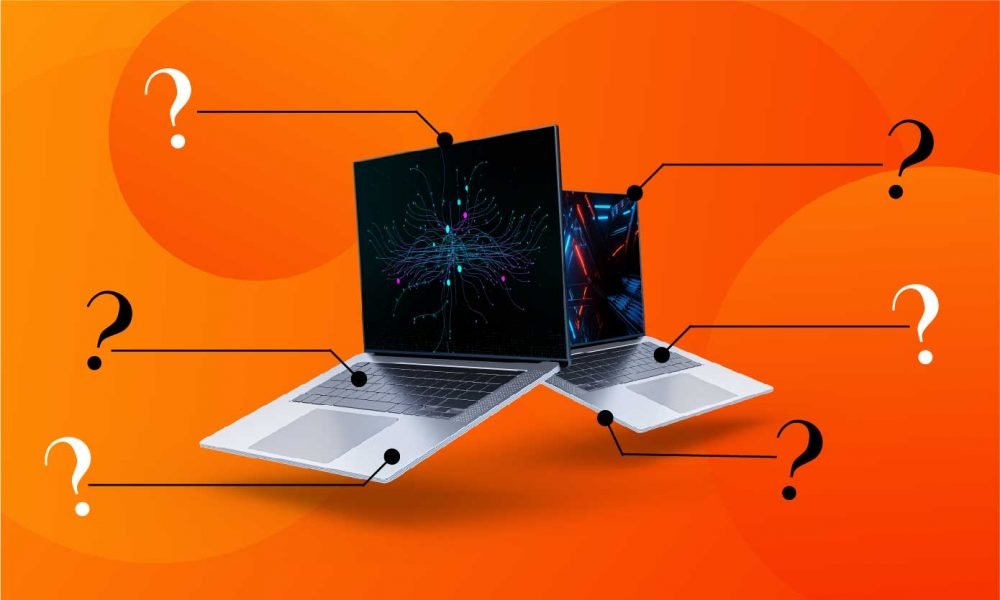
Ever felt lost in a sea of acronyms and numbers when buying a new computer? You’re not alone! At CompuMaster, we believe in empowering you with knowledge so you can make the best decision for your needs and budget. Let’s demystify those specifications and show you what really matters.
Beyond the Buzzwords: What Specs Truly Count?
It’s easy to get dazzled by big numbers like “large screen” or “8GB RAM,” but sometimes the devil is in the details. Here’s a breakdown of common terms and what to look for:
* Processor (CPU – Central Processing Unit): The Brains of the Operation
* What it is: This is the most crucial component, dictating how fast and efficiently your computer can perform tasks.
* What to look for:
* Brand & Series: Intel (Core i3, i5, i7, i9) and AMD (Ryzen 3, 5, 7, 9) are the dominant players. Higher numbers generally mean more power.
* Generation: Newer generations (e.g., “13th Gen Intel Core”) offer better performance and efficiency.
* Clock Speed (GHz): While a factor, don’t get fixated on this alone. A 1GHz Celeron is vastly different from a 1GHz Core i7. The architecture behind the speed is key.
* Cores: More cores (e.g., Quad-core, Hexa-core, Octa-core) mean better multitasking.
* Red Flag: A device proudly advertising a “large screen” and “8GB RAM” but vaguely mentioning a “Celeron” or a low GHz without a specific processor model. This often indicates a very basic, entry-level CPU that will struggle with anything beyond light web Browse and word processing.
* RAM (Random Access Memory): Your Computer’s Short-Term Memory
* What it is: RAM allows your computer to handle multiple tasks and applications simultaneously without slowing down.
* What to look for:
* Capacity:
* 4GB: Bare minimum for very light use (email, basic Browse).
* 8GB: Good for everyday use, multitasking, streaming.
* 16GB+: Essential for gaming, video editing, graphic design, and heavy multitasking.
* Type (DDR4, DDR5): Newer types like DDR5 are faster and more efficient.
* Red Flag: Insufficient RAM for the intended use (e.g., 4GB if you plan to game or edit videos).
* Storage (HDD/SSD): Where Your Files Live
* What it is: This is where your operating system, programs, and all your files are stored.
* What to look for:
* SSD (Solid State Drive): Highly Recommended! SSDs are dramatically faster than traditional HDDs, leading to quicker boot times, faster application loading, and overall snappier performance.
* HDD (Hard Disk Drive): Cheaper per gigabyte, but much slower. Only consider if you need vast amounts of storage and speed isn’t a priority.
* Capacity (GB/TB): How much space you need depends on your files. 256GB SSD is often a good starting point, 500GB-1TB is ideal for most users, and more for gamers/creators.
* Red Flag: A low-cost device with a very small SSD (e.g., 64GB or 128GB) or, worse, a tiny “eMMC” storage, which is a very slow, limited type of storage often found in budget tablets.
* Graphics Card (GPU – Graphics Processing Unit): Visual Powerhouse
* What it is: Renders images to your screen. Integrated GPUs are built into the CPU (e.g., Intel Iris Xe, AMD Radeon Graphics) and are fine for everyday tasks. Dedicated GPUs (e.g., NVIDIA GeForce, AMD Radeon RX) are essential for gaming, video editing, and 3D design.
* What to look for: If you’re a gamer or creative professional, research specific dedicated GPU models for their performance tiers.
* Red Flag: A “gaming” laptop without a clearly specified dedicated GPU model.
* Screen/Display: Your Window to the Digital World
* What to look for:
* Size (inches): Personal preference.
* Resolution (e.g., 1920×1080 Full HD, 4K): Higher resolution means sharper images. Full HD (1080p) is standard.
* Panel Type (IPS, TN, OLED): IPS offers better viewing angles and color accuracy. OLED offers incredible contrast. TN panels are faster for gaming but have poorer viewing angles.
* Refresh Rate (Hz): Higher refresh rates (e.g., 120Hz, 144Hz+) offer smoother visuals, especially important for gaming.
The Red Flag Rule: Small Print, Big Problem
If a specification is conspicuously missing, vague, or listed in tiny print, it’s often a sign that the manufacturer is trying to hide a weaker component. Always dig deeper if a key spec like the exact CPU model or SSD type isn’t clearly stated. A large screen, 8GB RAM, and 500GB storage sound great, but if it’s paired with a Celeron and a 1GHz processor, you’re looking at a budget machine that will feel sluggish.
Your Smart Shopping Tools at CompuMaster
We’re committed to transparency and helping you make informed choices. That’s why we’ve built tools to simplify your shopping experience:
* Compare Products: See how different devices stack up side-by-side based on their specifications. Just look for the cycle icon to add products to your comparison list.
* Add to Favourites: Found something you love but aren’t ready to buy yet? Click the heart icon to save it to your favourites for easy access later.
* You’re in Control: Add and remove products from your Compare or Favourites lists as you wish!
Need a Helping Hand? We’re Here!
If ever in doubt about a specification, or if you just want personalized advice, don’t hesitate to reach out. Click the Live Chat button below to speak directly with an agent, or visit our Contact Us page.
Happy shopping! If you can’t find exactly what you’re looking for, let us know – we’ll do our best to source it for you at a competitive price.